BaseScan: The Essential Explorer for the Base Blockchain :-
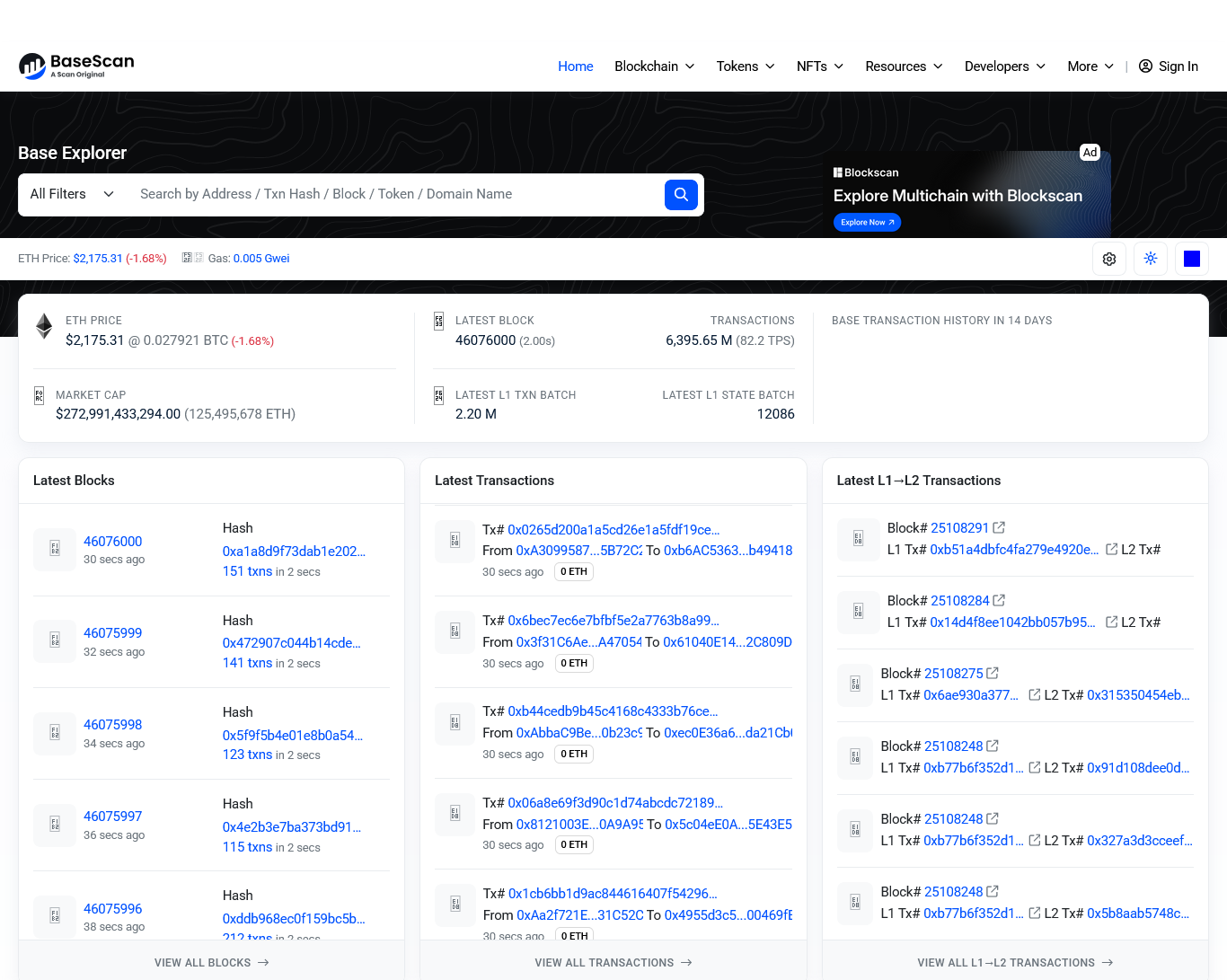
As blockchain ecosystems continue to expand, tools that provide transparency and accessibility have become indispensable. One such tool is BaseScan, the leading blockchain explorer for the Base ecosystem. Built on the familiar Etherscan infrastructure, BaseScan allows users to inspect transactions, monitor wallets, verify smart contracts, and analyze on-chain activity across the Base Layer 2 network.
For developers, traders, and crypto enthusiasts alike, BaseScan serves as the primary gateway into the Base blockchain.
What Is Base?
Before understanding BaseScan, it is important to understand the network it supports. Coinbase launched Base as an Ethereum Layer 2 solution built using the OP Stack. The network was designed to provide lower transaction fees, faster confirmation times, and scalability while still inheriting Ethereum’s security model.
Base rapidly gained adoption due to its strong integration with Coinbase products, developer-friendly environment, and growing decentralized application ecosystem.As activity on Base increased, the need for a reliable explorer became critical — and that role was filled by BaseScan.
What Is BaseScan?
BaseScan is a blockchain explorer specifically designed for the Base network. Operated by the Etherscan team, it functions similarly to Etherscan on Ethereum and Arbiscan on Arbitrum. BaseScan indexes blockchain data in real time and presents it through a searchable web interface. Users can search for:
. Wallet addresses , Transaction hashes , Smart contracts , Tokens , NFTsBlocks , Domain names
The platform acts as a “search engine” for blockchain activity, enabling users to independently verify transactions and inspect on-chain data.
Core Features of BaseScan;
1. Transaction Tracking:-
One of BaseScan’s most important functions is real-time transaction monitoring. Users can paste a transaction hash into the search bar and instantly view:
. Transaction status , Sender and receiver addresses , Gas fees , Block confirmations , TimestampToken transfers
This feature is especially useful when users need to confirm whether funds were successfully bridged, swapped, or transferred.
2. Wallet Analytics:-
BaseScan provides detailed wallet insights, including:
. ETH balances , Token holdings , NFT collections , Transaction history , Internal transactions
Some users even use BaseScan’s analytics tools to visualize activity heatmaps and monitor long-term usage patterns on Base.
3. Smart Contract Verification:-
Developers can verify smart contracts directly on BaseScan, allowing users to inspect source code and interact with contracts transparently. Supported verification methods include:
. Solidity single-file verification , Multi-file verification, JSON standard input , Vyper support , Sourcify imports
Verified contracts improve trust and security within the ecosystem.
4. Token and NFT Exploration:-
BaseScan indexes ERC-20, ERC-721, and ERC-1155 assets on Base. Users can explore:
. Token holder distributions , Transfer histories , Contract addresses , NFT ownership , Minting activity
This functionality helps traders and collectors evaluate projects and identify suspicious token activity.
5. Developer APIs:-
BaseScan also offers APIs compatible with Etherscan’s infrastructure, making integration easy for developers already familiar with Ethereum tooling.
The API enables applications to:
. Fetch transaction data , Monitor addresses , Retrieve token balances , Analyze smart contract interactions , Build dashboards and analytics tools
Why BaseScan Matters;
Transparency and Trust:-
Blockchain technology is built on transparency, and BaseScan strengthens this principle by making all network activity publicly accessible. Users no longer need to rely solely on wallet interfaces or application frontends; they can independently verify what actually happened on-chain.
Security and Scam Detection:-
BaseScan has become an important tool for identifying scams and malicious contracts. Crypto users frequently inspect token contracts to check for:
. Verified source code , Ownership privileges , Minting permissions , Suspicious wallet concentration , Proxy contract structures
Community members often combine BaseScan with security tools to avoid fraudulent projects.
Developer Accessibility:-
Because BaseScan mirrors the familiar Etherscan interface, onboarding developers into the Base ecosystem becomes much easier. Existing Ethereum developers can immediately navigate the explorer without learning a completely new interface.
Ecosystem Growth:-
As Base adoption grows, BaseScan plays a central role in supporting decentralized finance (DeFi), NFT marketplaces, gaming applications, and on-chain social platforms. The explorer effectively acts as public infrastructure for the network.
Challenges and Limitations ;
Despite its popularity, BaseScan is not perfect. Users occasionally report indexing delays during periods of high network activity. In such cases, transactions may be confirmed on-chain but temporarily unavailable in the explorer interface.
Other common issues include:
. Wallet balances not updating immediately , Delayed token indexing , Pending transactions caused by low gas settings
These issues are generally temporary and reflect infrastructure synchronization rather than actual network failure.
The Future of BaseScan :
As the Base ecosystem evolves, BaseScan is expected to introduce more advanced analytics and tooling. Potential future developments include:
. Enhanced cross-chain tracking , Improved wallet analytics , Deeper NFT insights , Expanded API capabilities , Better visualization dashboards , Community , oriented features
Given the rapid expansion of Layer 2 ecosystems, explorers like BaseScan will likely become even more important as foundational infrastructure for Web3 applications.
Conclusion ;
BaseScan has established itself as the primary explorer for the Base blockchain ecosystem. By offering transparent access to transactions, smart contracts, wallets, and token activity, it empowers users to independently verify and analyze blockchain data.
Whether used by developers deploying decentralized applications, traders verifying token transfers, or beginners exploring on-chain activity for the first time, BaseScan has become an essential component of the Base ecosystem.
As Layer 2 adoption accelerates and blockchain applications become more mainstream, platforms like BaseScan will continue to play a crucial role in making decentralized systems understandable, accessible, and trustworthy.